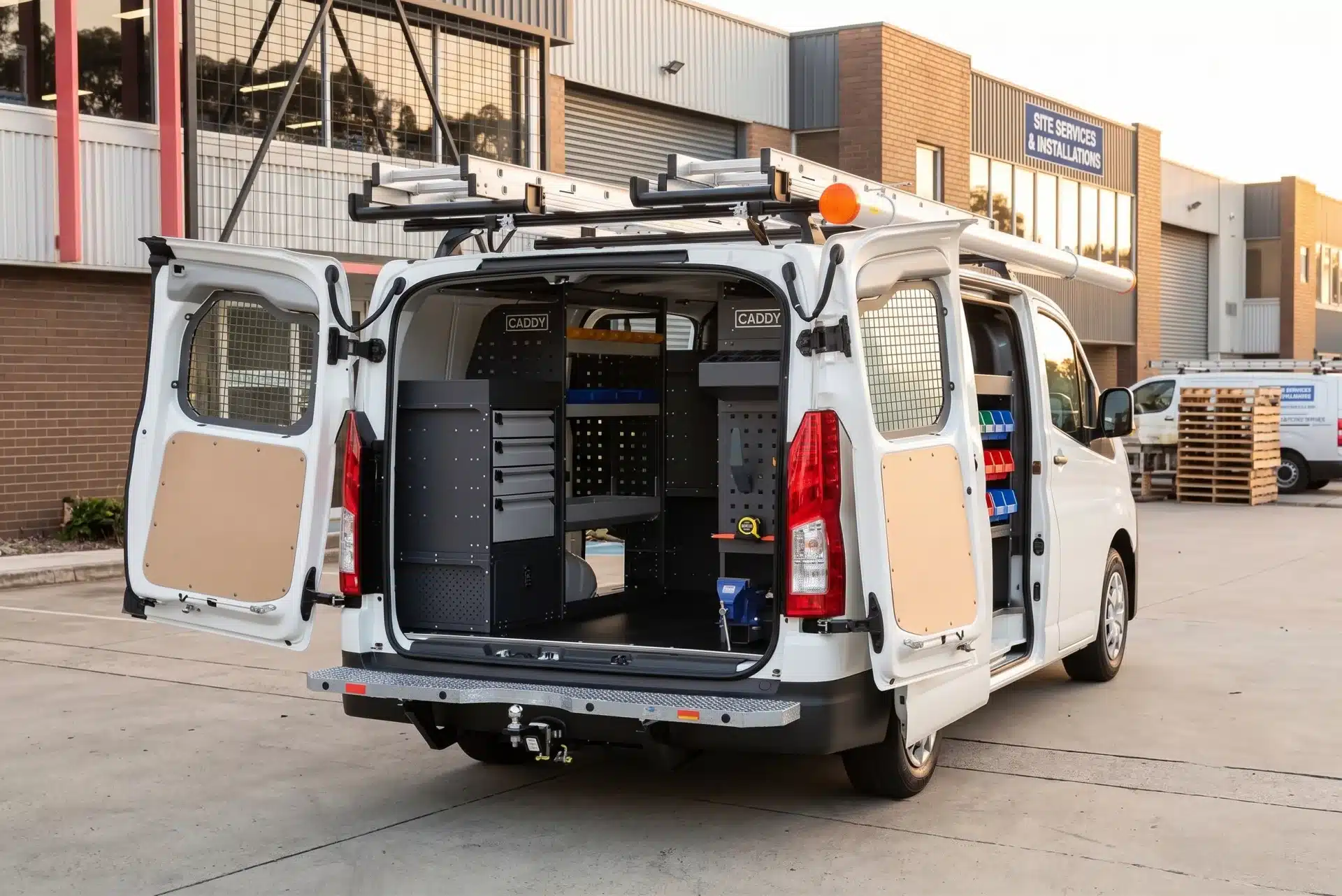
An electrician, plumber and HVAC technician may drive the same van, but their van fitouts should look nothing alike.
The tools are different. The parts are different. The way each trade works through a job site is different. A layout designed for an electrician will frustrate a plumber within a week. Get the layout wrong from the start, and you spend years fighting your own vehicle instead of working out of it.
Here’s how each trade should approach their van fitout.
Quick answer:
- Electricians need cable management and conduit storage.
- Plumbers need a false floor, drawers and bulk storage for copper and PVC.
- HVAC technicians need ventilated gas storage, small parts bins and a fold-down work surface.
- All three need a cargo barrier, non-slip flooring and a roof rack system.
Electrician Van Fitout Layout
The biggest challenge in an electrician’s van is cable: it’s long, heavy and awkward, and it takes up space no matter what you do. The rest of the van fitout has to work around that reality.
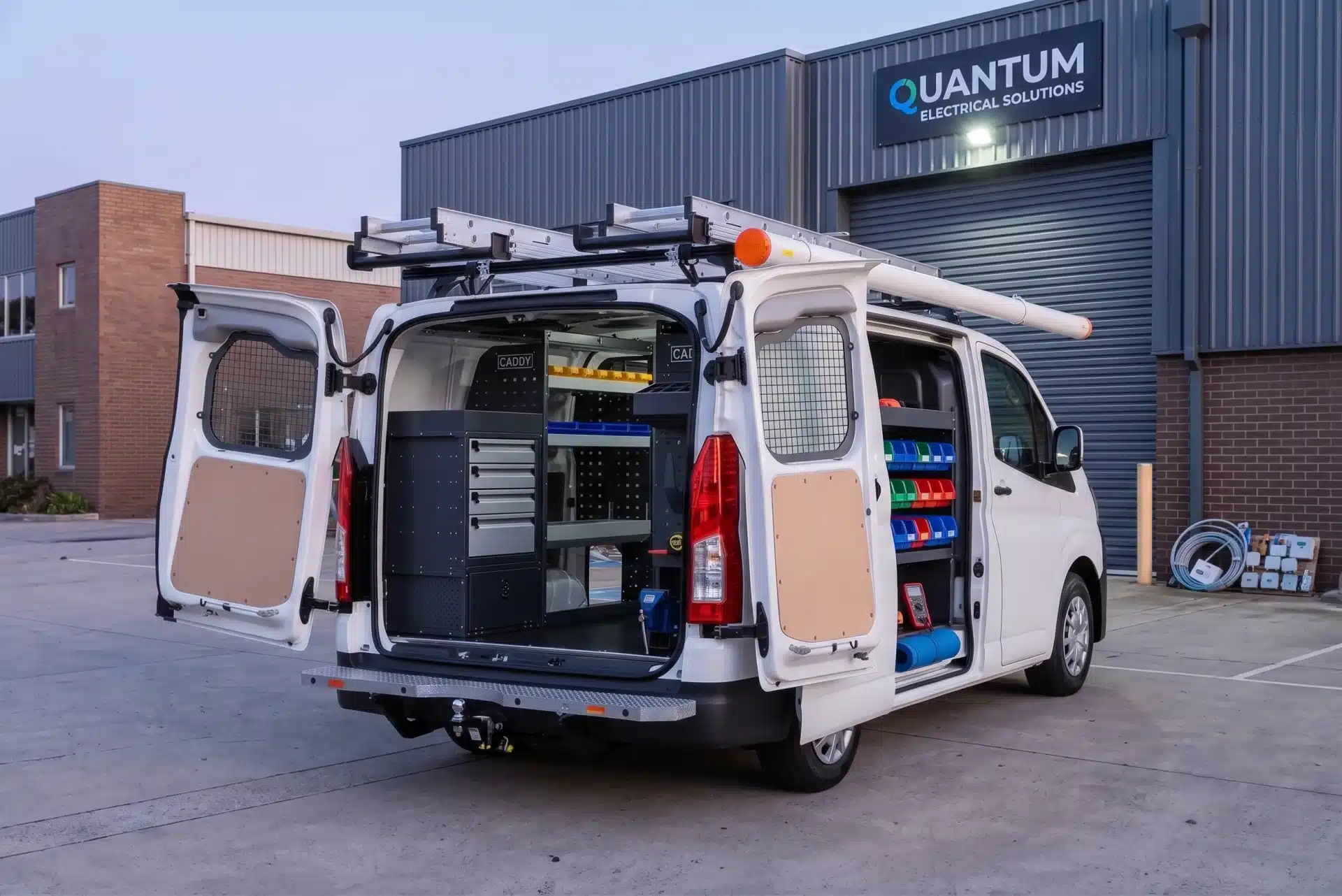
On one side of the van, adjustable shelving handles conduit, cable drums and grouped materials by job. Cable hooks and holders mounted above the shelves keep rolls accessible without them unravelling across the floor. On the opposite side, smaller shelving bays with lockable doors store test equipment, power tools and anything you don’t want walking off a job site.
A ladder slide, internal or roof-mounted, is non-negotiable. Add a cargo barrier and window guards, and the core layout is set.
The van storage configuration that works best for most commercial electricians: full-length shelving on one side, shorter shelving on the other to leave floor space for larger items and cable drums standing upright.
Plumber Van Fitout Layout
Plumbers carry the heaviest and most awkward stock of any trade, like copper pipe, PVC lengths, brass fittings, and compression fittings sorted into dozens of sizes. Weight distribution and access speed are the two things that matter most.
A false floor with ute storage drawers underneath is the foundation of any well-designed plumbing fitout. Stock your most-used fittings in the drawers, and you’ll stop having to pull everything out to find the one part you need. Adjustable shelving along the walls handles bulkier items, with larger bays at floor level for pipe and flexible hose.
Roof racks are essential as pipes and conduits that won’t fit inside can be secured on top and protected with appropriate covers. A rear step makes loading and unloading heavier equipment far less of an ordeal at the end of a long day.
HVAC Technician Van Fitout Layout
HVAC van fitouts have a safety dimension that the other trades don’t. If you’re transporting refrigerant or gas cylinders, ventilated storage is a requirement under Australian WHS regulations. A vented gas bottle cabinet with proper restraints keeps you compliant and protects the van.
Beyond gas storage, the main challenge is small parts. Thermostat wire, hose clamps, electrical connectors, fuses – the variety of components is enormous, and they all look similar in a box. Parts bins with clear fronts, labelled by category, solve this faster than any other system. Add a drawer system for tools and larger components.
A fold-down vice or sliding vice mount is worth the investment if you’re regularly fabricating copper or modifying components on-site. It gives you a proper work surface without permanently occupying floor space.
Cargo barriers are particularly important in an HVAC van; a solid barrier (rather than mesh) is the better choice when you’re carrying gases, as it helps prevent any vapour from entering the cabin.
What Every Trade Van Needs Regardless of Layout
Three things belong in every commercial van fitout, regardless of trade:
- A cargo barrier – tools and shelving become projectiles in a sudden stop. A barrier protects the driver and is required under chain of responsibility obligations.
- Non-slip flooring – hardwood ply or rubber matting protects the van floor, reduces tool movement, and provides a stable surface when loading from the rear.
- A roof rack system – even if you don’t carry ladders daily, the flexibility to secure long materials or equipment on the roof is worth having from day one.
Get a Custom Van Fitout Designed for Your Trade
A generic layout is a compromise. A trade-specific layout is a tool that pays for itself in time saved every single week.
Caddy Storage designs custom van fitouts for electricians, plumbers, HVAC technicians and other trades across Australia. If you’re fitting out a new van or upgrading an existing one, send an enquiry and a Caddy specialist will assess your vehicle and recommend a configuration that matches the way you work.
Running a ute instead of a van? Caddy also builds ute toolbox setups and full service body canopy configurations for trades working out of utes.